

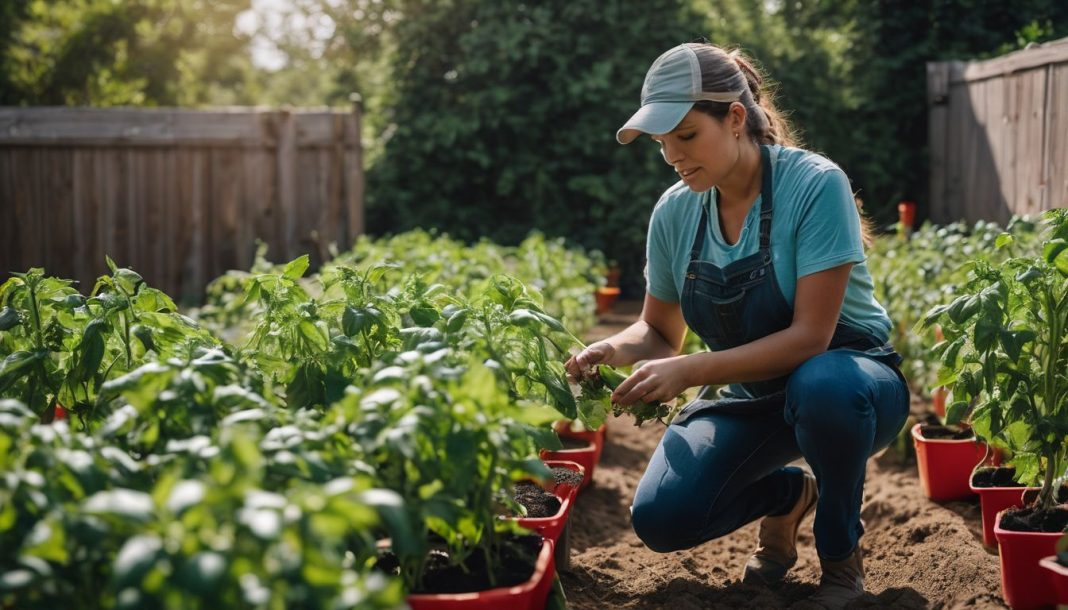
Is tomato gardening leaving you in knots? Trust me, I get it. It can be a real challenge to provide those beloved plants of yours with the support they crave. But after digging deep into research – and many seasons of trial and error in my own garden – I’ve found that staking tomatoes can make an incredible difference when it comes to yield and overall plant health.
In this blog post, I’ll share 7 essential tips for staking your tomatoes, aimed at helping you enjoy a more bountiful harvest. So are you ready to transform those sagging vines into flourishing stems? Let’s dive right in!
Key Takeaways
- Staking tomatoes is important for maximizing growth and yield, improving air circulation, reducing disease risk, and making harvesting easier.
- There are different types of tomato plants: determinate (stop growing at a certain size) and indeterminate (keep growing throughout the season), both of which benefit from staking.
- Choose between caging (using wire cages) or staking (using sturdy stakes) based on your preference and gardening situation.
- Stake all types of tomato plants for support, stake them at planting time to prevent damage, choose the right staking method for your garden, provide extra support for wire cages, don’t forget container tomatoes, prune regularly using clean tools.
Why Stake Tomatoes?
Staking tomatoes is essential for maximizing their growth and yield, whether you have determinate or indeterminate varieties. Staking provides support to the tomato plants, prevents them from drooping or bending under the weight of their fruit, improves air circulation around the plant, reduces disease risk, and makes it easier to harvest.
Benefits of staking tomatoes
Staking tomatoes has many good things. It helps keep your plants clean and free from bugs. Plants that touch the ground can get sick more often. Staking also lets air move around the plants better.
This lowers the chance of disease spreading on leaves or fruit. Plus, staked tomatoes are easier to pick! They grow tall, not wide, so you don’t have to reach into the thick parts of the plant.
Last but not least, staking can lead to a bigger harvest because it stops fruit from rotting on the ground.
Types of tomato plants
There are different types of tomato plants that you can stake in your garden. Determinate tomatoes grow to a certain size and then stop, while indeterminate tomatoes keep growing and producing throughout the season.
Both types can benefit from staking to provide support for their stems and heavy fruits. Determinate varieties are more compact and bush-like, making them easier to manage with stakes or cages.
Indeterminate varieties, on the other hand, grow tall and require taller stakes or trellises for proper support. Understanding the type of tomato plant you have will help you choose the right staking method for optimal growth and harvest.
Choosing between caging and staking
When it comes to supporting your tomato plants, you have two options: caging or staking. Caging involves placing a wire cage around the plant to provide support as it grows. Staking, on the other hand, involves using sturdy stakes to hold up the plant and tying it to the stake as it grows taller.
Both methods have their advantages and disadvantages. With caging, you don’t need to worry about tying up the plant or pruning as much, but it may take up more space in your garden.
Staking allows for better airflow and easier access to the tomatoes, but requires more maintenance with tying and pruning. Ultimately, the choice between caging and staking depends on your preference and gardening situation.
Essential Tips for Staking Tomatoes
Stake all types of tomato plants, whether they are determinate or indeterminate, to support their growth and prevent them from sprawling on the ground.
Stake all types of tomato plants
To ensure the proper growth and support of tomato plants, it is important to stake all types of tomatoes. Whether you’re growing determinate or indeterminate varieties, staking them will help prevent the stems from bending or breaking.
By securely anchoring stakes in the soil at either end of the row and between every third or fourth plant, you can provide much-needed stability. It’s also crucial to tie the tomato plants to their stakes using materials like twine or soft plant ties.
This will help support their growth as they produce heavy fruit. So don’t forget to stake your tomato plants for a better harvest!
Stake at planting time
When staking your tomato plants, it’s important to do it right from the beginning. When you plant your tomatoes in the ground or in containers, make sure to stake them at the same time.
This will help prevent damage to the roots or stems later on when they are already established. By placing stakes in the soil next to each tomato plant during planting, you can gently tie up the stem as it grows and provide support throughout its growth cycle.
Staking at planting time ensures that your tomato plants have the necessary support right from the start, which will promote healthy growth and help prevent any potential issues down the line.
Use the right staking method for your garden
Choosing the right staking method for your garden is crucial for the proper growth and support of tomato plants. Different methods work well for different types of gardens, so it’s important to consider what will be most effective for your specific setup.
One common method is using stakes placed on either end of the row and in between every third or fourth tomato plant to ensure stability. Securely anchoring each stake in the soil will prevent the plants from falling over.
Another popular technique is the Basket Weave or Florida Weave method, which involves weaving twine horizontally between stakes to create a trellis-like structure that supports tomato vines as they grow.
Provide extra support for wire cages
When using wire cages to support your tomato plants, it’s important to provide extra support to ensure the cages stay in place and can handle the weight of growing tomatoes. One way to do this is by using stakes or additional supports around the perimeter of each cage.
This will help prevent the cage from tipping over or collapsing under the weight of the plants. By securing your wire cages with extra support, you can ensure that your tomato plants grow upright and receive proper support throughout their growth cycle.
Don’t forget container tomatoes
Container tomatoes are a great option for those who have limited space or want to grow tomatoes on their deck or patio. When staking container tomatoes, it’s important to choose the right sized pot and provide adequate support for the plants.
You can use stakes, trellises, or cages to help keep the tomato vines upright and prevent them from toppling over. Additionally, regular pruning is essential to maintain the size and shape of the plant.
By properly supporting and caring for your container tomatoes, you can enjoy a bountiful harvest right at your fingertips!
Prune regularly
To ensure healthy and fruitful tomato plants, it’s important to prune them regularly. Pruning involves removing the suckers that grow in the leaf axils of the main stem. These suckers can divert energy away from producing fruit, so removing them helps direct nutrients towards developing bigger and better tomatoes.
Additionally, pruning improves air circulation around the plant, which reduces the chances of disease. Remember to use clean gardening shears or scissors when pruning to prevent spreading any diseases from one plant to another.
So don’t forget to make pruning a regular part of your tomato care routine for a bountiful harvest!
How to Stake Tomatoes
Now, let’s get into the nitty-gritty of how to stake tomatoes and ensure a bountiful harvest.
Materials and tools needed
For staking tomatoes, you will need some basic materials and tools to get started. Firstly, you’ll need stakes or supports. Bamboo stakes are a popular choice because they’re sturdy and easy to work with.
You’ll also need twine or soft plant ties to secure the tomato plants to the stakes. Make sure it’s gentle on the stems so that it doesn’t damage them. Lastly, you may want pruning shears or scissors to trim any excess growth from the tomato plants as they grow.
These simple tools will help ensure that your tomato plants have the support they need for a better harvest.
Instructions for staking determinate and indeterminate tomatoes
To stake determinate tomatoes, start by placing a sturdy stake next to each plant at planting time. Make sure the stake is taller than the mature height of the tomato plant. Then, gently tie the main stem of the tomato plant to the stake using soft ties or twine.
As the tomato grows, continue tying it up every 6 inches or so until it reaches its full height.
For indeterminate tomatoes, use tall and strong stakes that can support their vigorous growth. Place one stake near each tomato plant at planting time and make sure it is firmly secured in the ground.
As the tomato plants grow, carefully tie them to the stakes using loose but secure loops of twine or soft ties. It’s important to regularly check on your staked tomatoes and adjust any ties or supports as needed throughout their growth cycle.
Pruning tips
Pruning tomato plants is an important step in maintaining their health and optimizing their growth. When pruning, it’s best to start by removing any suckers that develop between the main stem and branches.
These suckers can divert energy away from fruit production. Additionally, you should remove lower leaves up to the first set of flowers. This allows for better air circulation around the plant, reducing the risk of disease.
Remember, when pruning indeterminate varieties (those that continue to grow throughout the season), you’ll want to leave some foliage on the plant for photosynthesis. On the other hand, determinate varieties (which have a predetermined size) can be pruned more heavily since they won’t grow as much after pruning.
Conclusion
Staking tomatoes is a crucial step for a better harvest. By following these 7 essential tips, you can provide the necessary support and ensure healthy growth for your tomato plants.
Remember to stake all types of tomato plants, use the right staking method, and prune regularly for optimal results. With proper staking techniques, you’ll be on your way to enjoying a bountiful tomato harvest in no time!

Hi, my name’s Elena Coolidge. I’m a DIY enthusiast who loves building fun woodworking plans. These DIY plans are fun hobby projects for enthusiasts or even more advanced builders that want to build things like bunk beds, end tables or even a duck box!


